
In-Depth Analysis of Great Wall Motor's 2025 Annual Operating Performance
Report Type: In-Depth Research Report Category: China Automaker Filings Data Source: Great Wall Motor Co., Ltd. 2025 Annual Report (CNINFO, audited by Deloitte Touche Tohmatsu Certified Public Accountants LLP) Report Date: April 3, 2026
I. Executive Summary
In 2025, Great Wall Motor delivered a complex operating picture of higher revenue but lower earnings. Full-year revenue reached RMB 222.824 billion, up 10.20% year over year (2024: RMB 202.194 billion), setting a new record high. However, net profit attributable to shareholders fell 22.07% to RMB 9.865 billion (2024: RMB 12.660 billion), while net profit excluding non-recurring items dropped 37.50% to RMB 6.059 billion. Gross margin declined from 19.51% to 18.04%, down 1.47 percentage points.
At the same time, the company's core quality-of-operations indicator—cash flow from operating activities—rose sharply by 45.31% to RMB 40.355 billion (2024: RMB 27.771 billion). This clear divergence from net profit suggests that the earnings decline included a significant number of non-cash factors, while the company's actual cash-conversion capability remained much stronger than the income statement alone would imply.
Three growth engines drove volume expansion: Total annual sales reached 1,323,811 vehicles, up 7.23% year over year. Among them, new energy vehicle sales rose to 405,963 units (+26.00%), while overseas sales climbed to 506,787 units (+11.60%), both hitting new highs and accounting for most of the net increase in volume.
The brand portfolio became more polarized: WEY sold 99,617 vehicles, surging 79.36% year over year and reaching its highest level in six years. Haval remained the core franchise with 761,487 units sold (+7.69%). Tank sold 234,442 vehicles and maintained the No. 1 market share in China's off-road SUV segment. GWM Pickup sold 178,936 units, with domestic retail market share approaching 50%, extending its 28-year streak as China's pickup sales champion.
This report provides a comprehensive analysis of Great Wall Motor's 2025 performance across five dimensions: financial results, sales mix, technology and R&D, globalization strategy, and brand expansion.
II. In-Depth Financial Analysis
2.1 The Revenue-Profit Scissors Gap
In 2025, Great Wall Motor generated revenue of RMB 222.824 billion, surpassing the RMB 220 billion mark for the first time and posting 10.20% year-over-year growth. That expansion was driven primarily by higher sales volume (+7.23%) and an upgraded product mix. On the earnings side, however, the company showed a pronounced scissors gap: net profit attributable to shareholders fell 22.07% year over year to RMB 9.865 billion, while net profit excluding non-recurring items declined even more sharply, down 37.50% to RMB 6.059 billion.
Gross margin fell from 19.51% in 2024 to 18.04% in 2025, a decrease of 1.47 percentage points. Behind this decline was the intensifying price competition in China's auto market, which continued to pressure industry profitability. At the same time, Great Wall Motor's push toward new energy and intelligent vehicles increased R&D and selling expenses in the short term, further squeezing margins.
2.2 Divergence Between Operating Cash Flow and Net Profit
The most notable financial signal was the strong performance of operating cash flow. In 2025, net cash flow from operating activities reached RMB 40.355 billion, up 45.31% year over year (2024: RMB 27.771 billion).
The contrast between a 22% decline in net profit and a 45% increase in operating cash flow is striking. This divergence indicates that the earnings decline likely included a substantial amount of non-cash expenses, such as asset impairment provisions and non-recurring losses. It also suggests improved efficiency in receivables management and working-capital turnover, as well as a higher contribution from non-cash charges such as depreciation and amortization. From the perspective of operating quality, cash flow offers a more reliable measure of the company's true cash-generation capacity than net profit alone.
2.3 Asset Structure and Liquidity Cushion
As of the end of 2025, the company reported total assets of approximately RMB 225.288 billion and total liabilities of RMB 137.396 billion. Current assets stood at RMB 137.647 billion, versus current liabilities of RMB 126.216 billion. Of that:
Cash and cash equivalents totaled RMB 28.846 billion
Trading financial assets totaled RMB 34.966 billion
Together, they amounted to roughly RMB 63.812 billion, forming a solid liquidity cushion
Overseas assets reached RMB 53.395 billion, accounting for 23.70% of total assets, highlighting the substantial scale of the company's global asset footprint.
2.4 Shareholder Returns
Basic earnings per share came in at RMB 1.16 in 2025, up a slight 1.49% year over year (2024: RMB 1.14). EPS still edged higher despite the decline in net profit, mainly due to changes in the total share count. Weighted average return on equity was 11.76%.
The company plans to distribute a cash dividend of RMB 0.35 per share (tax included), subject to approval at the 2025 annual general meeting. Based on a total share count of roughly 8.5 billion shares, total annual dividends would amount to about RMB 2.975 billion, implying a payout ratio of around 30%.
III. Sales and Product Mix Analysis
3.1 Volume Growth and Mix Upgrade
Total vehicle sales in 2025 reached 1,323,811 units, up 7.23% from 1,234,528 units in 2024. Broken down by vehicle category:
Vehicle Category | 2025 Sales (Units) | YoY Change | Share |
|---|---|---|---|
SUV | 1,033,097 | +4.45% | 78.0% |
Pickup | 178,936 | +2.22% | 13.5% |
Sedans and NEVs | 213,194 | +58.73% | 16.1% |
Sedans and new energy vehicles posted the most impressive growth rate at 58.73%, reflecting Great Wall Motor's accelerating push in the NEV segment. SUVs remained the company's core business, accounting for nearly 80% of sales while continuing to grow steadily.
3.2 Performance Across the Brand Portfolio
Haval: Sales reached 761,487 units, up 7.69% year over year, with cumulative users exceeding 10 million. In 2025, Haval Raptor sold 89,304 units (+33.84%) and Haval Big Dog PLUS sold 180,201 units (+18.13%), highlighting the contribution from new products.
Tank: Sales reached 234,442 units, with cumulative global sales surpassing 830,000 vehicles, firmly securing the No. 1 market share in China's off-road SUV segment. In 2025, the brand launched the new Tank 500, available with three powertrain options—3.0T gasoline, 2.0T Hi4-T, and 2.0T Hi4-Z—as well as the new Tank 400.
WEY: Sales climbed to 99,617 units, up 79.36% year over year and hitting a six-year high, with monthly sales consistently above 10,000 units in the second half. Key launches included the Gaoshan premium new energy MPV and the Blue Mountain Intelligent Advanced Edition equipped with VLA-assisted driving.
ORA: Sales totaled 48,312 units, bringing cumulative sales to more than 557,000 vehicles. In 2025, the brand launched the ORA 5, built on a new platform and equipped with the Coffee Pilot 3 intelligent driving system.
GWM Pickup: Sales reached 178,936 units, including 118,237 domestic sales and 60,699 exports. Domestic retail market share approached 50%, and the brand retained its title as China's pickup sales champion for the 28th consecutive year. Cumulative global sales of the GWM POER exceeded 800,000 units.
3.3 Dual Engines: New Energy and Exports
Full-year NEV sales reached 405,963 units, up 26.00% year over year (2024: 322,202 units). Although there is still room to accelerate relative to the industry's rising penetration trend, 26% growth remains meaningfully higher than the company's total sales growth.
Overseas sales rose to 506,787 units, up 11.60% year over year and setting a new record. Overseas volume accounted for about 38.3% of total sales, continuing to rise from the previous year. The export mix included 430,242 SUVs, 60,699 pickups, and 95,932 sedans and NEVs, indicating a gradual shift from lower-end exports toward a more mid- to high-end product mix.
IV. Technology and R&D Investment
4.1 Doubling Down on R&D Against the Cycle
In 2025, R&D expenses rose 12.13% year over year to RMB 10.432 billion (2024: RMB 9.304 billion), accounting for 6.70% of revenue. Including capitalized R&D, total R&D investment reached RMB 14.938 billion.
Even under the pressure of a 22% decline in net profit, Great Wall Motor still increased R&D investment by 12%, outpacing revenue growth of 10.20%. This underscores management's commitment to long-term technology competitiveness, even as it continues to weigh on short-term profitability.
4.2 The Dayu Platform: A Full-Powertrain Foundation
In 2025, Great Wall Motor launched the Dayu Platform, described as the world's first native AI-based full-powertrain vehicle platform. It supports six powertrain formats—gasoline, diesel, battery electric, plug-in hybrid, hybrid electric, and hydrogen—and covers seven major vehicle categories. The debut of the Dayu Platform marked a major step forward in the company's platform-based and modular vehicle-development capabilities, laying the groundwork for future product iteration and cost control.
4.3 The Hi4 Hybrid Technology Matrix
The new-generation Hi4 intelligent four-wheel-drive hybrid technology is Great Wall Motor's core weapon in the hybrid segment and has already evolved into several architectures:
Hi4: Intelligent four-wheel-drive hybrid that combines the performance of four-wheel drive with the energy consumption of two-wheel drive
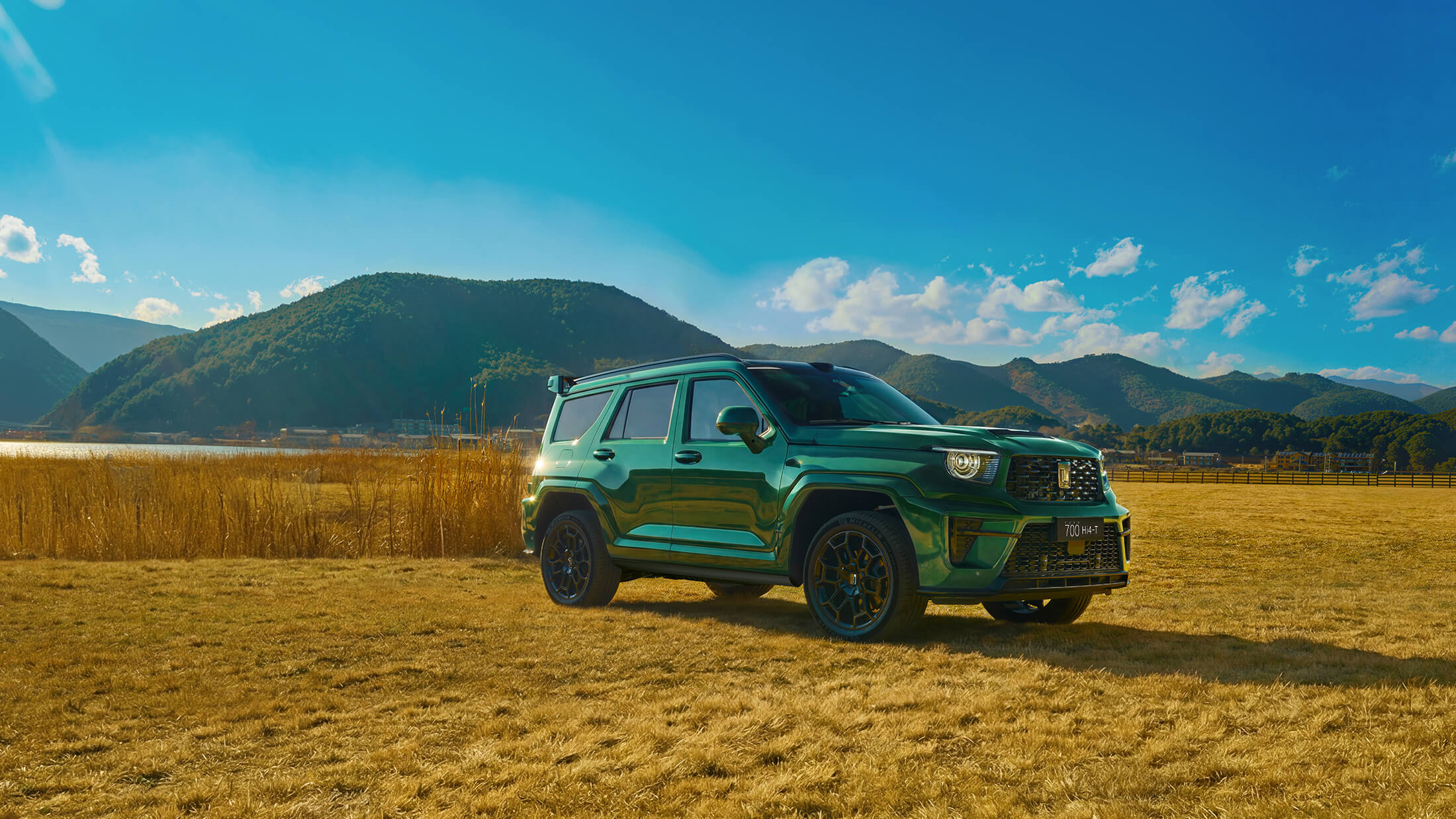
Hi4-T: A super-hybrid architecture tailored for rugged off-road applications
Hi4-Z: A hybrid solution for broader off-road scenarios
Hi4-G: A super-hybrid solution for heavy trucks
Hi4 won the first prize for scientific and technological progress from the Society of Automotive Engineers of China, underscoring industry recognition of its technical strength. In 2025, the Shanhai Poer Hi4-T became the world's first off-road hybrid pickup, marking a new chapter for new energy pickups in China.
4.4 Smart Driving: VLA Large Model and Coffee Pilot
Intelligent driving was a core strategic focus for Great Wall Motor in 2025:
The VLA (Vision-Language-Action) assisted-driving large model was officially deployed, debuting in the WEY Blue Mountain Intelligent Advanced Edition and moving the user experience from command response to proactive understanding
Coffee Pilot 3 was rolled out at scale in models including the Tank 400, Tank 500, and ORA 5, supporting urban NOA functions
Coffee Pilot 4, equipped with VLA plus a world model, was introduced for high-end vehicles
Coffee OS 3, the third-generation smart cockpit system, was installed in models including the new Tank 500
V. Globalization Strategy and Overseas Expansion
5.1 From Product Exports to Ecosystem Exports
Great Wall Motor continued to advance its global "ONE GWM" brand program, built around a strategy of localized production capacity, localized operations, cross-cultural branding, and supply-chain security. The company is shifting from simple product exports to an "ecosystem going global" model, aiming to build out the full value chain overseas across R&D, manufacturing, supply, sales, and service.
Key overseas data points for 2025:
Overseas sales: 506,787 vehicles (+11.60%)
Sales network spanning more than 170 countries and regions
More than 1,500 channels
Global cumulative users exceeding 16 million
Cumulative overseas sales surpassing 2 million vehicles
5.2 Overseas Manufacturing Footprint
The full-process factory in Brazil began operations in August 2025, becoming a core hub for the Latin American market. The plant enables localized production and technical adaptation, and the Tank 300 Hi4-T and Haval H9 have already been launched in Brazil, followed by the WEY Blue Mountain in October.
The full-process vehicle manufacturing base in Thailand remained in operation, where the diesel-powered Tank 500 made its global debut. In addition, KD plants in Ecuador, Malaysia, and Pakistan remained operational, while the KD plant in Uzbekistan reached the milestone of its 10,000th vehicle rolling off the line.
5.3 Global Risks and Responses
The annual report highlighted two key risks:
Rising geopolitical conflict and trade barriers internationally, creating uncertainty in overseas markets
A continuously richer product mix in China's domestic auto market, intensifying homogeneous competition
The company's response centers on deep regional execution and localized operations. Overseas plants help mitigate trade-barrier risks through local production, while differentiated technologies—such as Hi4 hybrid systems, Coffee intelligent driving, and the Dayu Platform—are intended to reduce exposure to low-price, copycat competition at home. With overseas assets already at RMB 53.395 billion, or 23.70% of total assets, the operating efficiency of those global assets will become an important area to watch.
VI. Brand Strategy and Category Expansion
6.1 Elevating the "ONE GWM" Brand
Great Wall Motor continued to strengthen its "ONE GWM" brand strategy, reinforcing the leadership role of the GWM master brand. On the product side, the company anchors itself in a quality-first culture. On the category side, it leverages three high-potential tracks—off-road vehicles, premium MPVs, and new energy vehicles—to introduce higher-value products.
At its core, the strategy is about shifting from scale leadership to value leadership. The path includes:
Tank: Consolidate its off-road ecosystem moat and secure a stronger position in the premium segment
WEY: Accelerate its new energy transition to meet niche-market demand
Haval: Preserve scale in the core business while maintaining user loyalty
ORA: Continue deepening its focus on female consumers
6.2 Category Expansion Beyond Traditional Automaking
In 2025, Great Wall Motor also demonstrated ambitions that extend beyond the traditional boundaries of automaking:
GWM Souo Motorcycle: More than 500 touring motorcycles were delivered during the year, with market share above 25% in the luxury heavyweight motorcycle segment of its class. In October 2025, the company launched the Souo S2000 cruiser, equipped with an eight-cylinder, eight-speed powertrain and an automotive-grade smart cockpit system.
Hybrid Heavy Trucks: The G-series hybrid heavy truck G1050 entered the market, using Hi4-G super-hybrid technology for heavy trucks and carrying a price tag of RMB 536,600. This marks an important step in Great Wall Motor's expansion into commercial vehicles.
At present, motorcycle and heavy-truck operations are still relatively small and make only a limited contribution to overall earnings, but they clearly reflect the company's ambition to evolve into a more diversified mobility provider.
VII. Assessment of Operating Quality and Outlook
7.1 Overall Assessment of Operating Quality
Strengths:
Operating cash flow reached RMB 40.355 billion (+45.31%), indicating strong cash-generation capability
Liquidity remains ample, with cash and financial assets totaling about RMB 63.8 billion
R&D investment increased 12% against the cycle, reflecting deep technology reserves
Overseas sales hit a record high, with globalization entering the stage of local production deployment
NEV sales grew 26%, and the product mix continued to improve
Challenges:
Gross margin fell 1.47 percentage points to 18.04%, highlighting pricing pressure
Net profit declined 22% year over year, underscoring the tension between revenue growth and earnings pressure
Geopolitical and trade-barrier risks remain elevated in overseas markets
Domestic competition is becoming increasingly homogeneous
7.2 Medium-Term Growth Drivers
Continued rise in NEV penetration: With 405,963 NEVs sold in 2025 (+26%), the Dayu Platform and multi-powertrain architecture should accelerate the buildout of the company's NEV portfolio
Deeper localization in overseas markets: The launch of the Brazil plant marks a new phase of local manufacturing and could lower the impact of trade barriers while improving overseas margins
Advancement in premium brand positioning: Tank sold 234,442 vehicles and WEY grew 79%, suggesting that brand pricing power is gradually being unlocked
Differentiated intelligent-driving experience: The VLA large model and Coffee Pilot create a differentiated technology moat that could help the company move beyond low-price competition
7.3 Long-Term Strategic Direction
Chairman Wei Jianjun has emphasized a strategy centered on trust, quality, collaboration, and execution, guiding Great Wall Motor's transition from scale-driven growth to growth led by technology and value. Through advances in intelligent new energy vehicles, further expansion in off-road products, high-quality ecosystem-based globalization, and continued core technology R&D, the company is positioning itself for its next 35 years of development.
7.4 Risk Factors
If gross margin continues to decline, it will place further pressure on net profit, making it important to watch whether product-mix optimization in 2026 can reverse the margin trend
Overseas expansion remains exposed to geopolitical tensions and trade barriers, which could affect local operations and profitability
Intensifying domestic competition could continue to pressure pricing, margins, and market positioning